|
In modern industrial piping systems, issues such as thermal expansion and contraction, mechanical vibration, and foundation settlement are ubiquitous. Improper handling can lead to pipe deformation, joint leakage, or even equipment damage and safety accidents. Rubber expansion joints, as flexible connection elements in piping systems, have become the ideal solution for these challenges due to their unique structural and performance advantages.
I. What Are Rubber Expansion Joints?
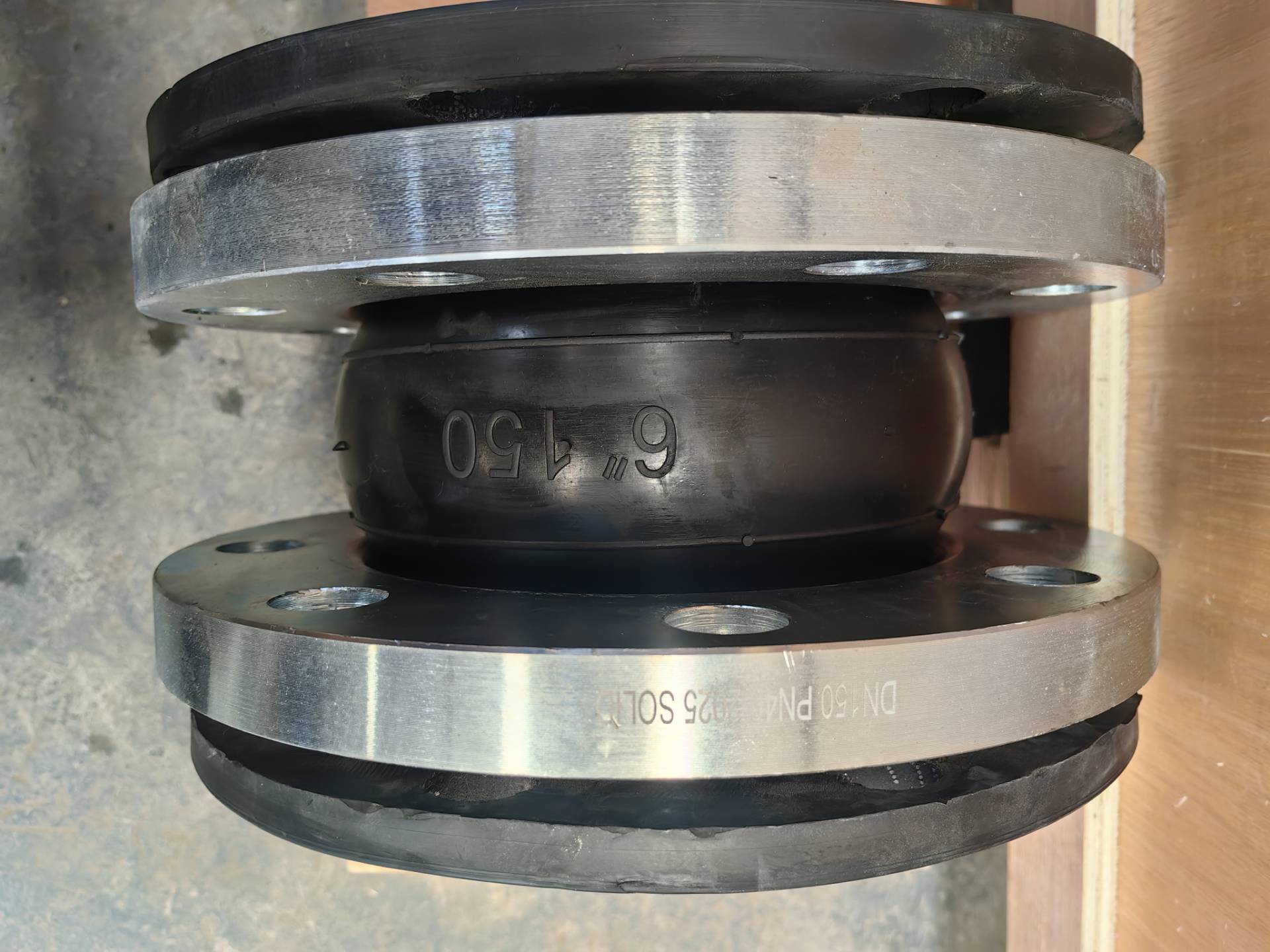
Rubber expansion joints, also known as rubber flexible connectors or rubber compensators, are highly elastic pipe connection elements made from a composite of rubber and reinforcement materials. Their construction consists of an inner rubber layer, a reinforcement layer, and an outer rubber layer, with metal flanges or threaded ends at both sides for connection to piping systems.
Rubber expansion joints utilize the elasticity and deformability of rubber to absorb various displacements and vibrations generated during piping system operation, providing integrated functions of vibration damping, noise reduction, displacement compensation, and stress relief.
II. Three Core Functions
Displacement Compensation
Pipes undergo thermal expansion and contraction with temperature changes, resulting in axial movement. Equipment operation may generate radial offset and angular rotation. Rubber expansion joints, with their flexible structure, effectively absorb these displacements, preventing piping system deformation or damage caused by stress concentration.
Vibration Damping and Noise Reduction
Various pumps, compressors, and other equipment generate mechanical vibration during operation, which can be transmitted throughout the system through rigidly connected pipes. Rubber expansion joints offer excellent vibration isolation performance, significantly reducing vibration transmission rates while absorbing fluid flow noise within pipes, improving the working environment.
Stress Relief
Installation deviations are inevitable during piping installation, and foundation settlement may occur after equipment operation. Rubber expansion joints compensate for installation errors and settlement displacement, relieving additional stress on piping systems and protecting connected equipment from extra loads.
III. Typical Applications
Pump Inlets and Outlets
Pump inlets and outlets represent the most common application for rubber expansion joints. Installed at pump suction and discharge connections, they absorb vibrations generated during pump operation, preventing vibration transmission along pipelines while compensating for installation deviations between pipes and pump bodies.
HVAC Systems
In central air conditioning systems at connections such as chillers, cooling towers, and fan coil units, rubber expansion joints absorb thermal expansion and contraction displacements, reduce system operating noise, and enhance overall comfort levels.
Chemical and Industrial Pipelines
In industrial sectors such as chemical, power generation, and metallurgy, rubber expansion joints are widely used in various media conveying pipelines, compensating for thermal pipe displacement, absorbing equipment vibration, and ensuring safe system operation.
Marine and Offshore Engineering
In ship piping systems characterized by compact spaces and complex vibrations, rubber expansion joints play an irreplaceable role as flexible connections, accommodating hull deformation and equipment vibration.
IV. Selection and Installation Guidelines
Selection Considerationsv
Select appropriate rubber expansion joint specifications based on pipe diameter, working pressure, media type, operating temperature, and required compensation capacity. Single-sphere configurations are suitable for general displacement compensation, while double-sphere configurations provide greater compensation capacity.
Installation Requirements
During installation, ensure the rubber expansion joint remains in its natural state without forced extension or compression to compensate for installation errors. Flange bolts should be tightened evenly in a diagonal pattern to avoid uneven local stress. For applications requiring travel limitation, limit devices should be installed.
Precautions
Rubber expansion joints should avoid contact with corrosive media such as oils, strong acids, and alkalis, and should not be exposed to ozone or ultraviolet environments for extended periods. Regular inspection of rubber surfaces for aging and cracks is recommended to ensure operational safety.
V. Product Series and Technical Support
Our rubber expansion joint product series is comprehensive, covering single-sphere, double-sphere, reducing, and elbow configurations, with specifications ranging from DN32 to DN3000 and working pressures from 0.6MPa to 2.5MPa to meet various operating condition requirements. Products are available in multiple material options, including natural rubber, EPDM, NBR, and FKM, suitable for various media environments such as water, oil, acids, alkalis, and high-temperature steam.
Our professional technical team provides comprehensive selection guidance, installation solutions, and after-sales service. Whether for standard product selection or special condition custom requirements, we offer professional support.
|