|
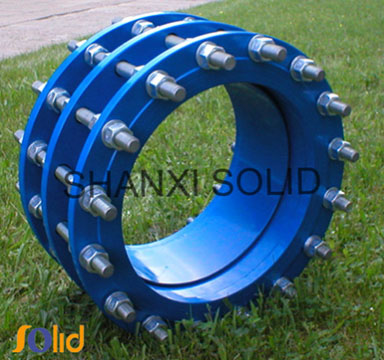
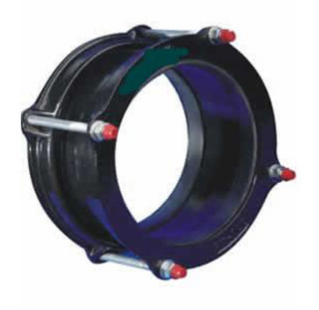
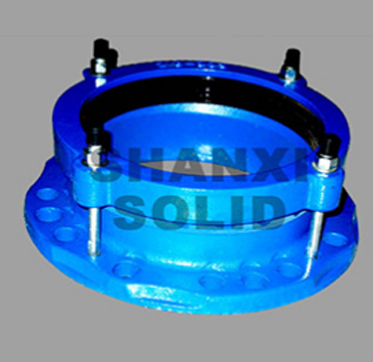
Dismantling joints are key components in pipeline systems for compensating for displacement and facilitating maintenance. Their sealing performance directly determines the safety and stability of pipeline network operation. Seal failure typically presents as moderate leakage. Various factors contribute to this issue.
I. Accurate Selection to Avoid Sealing Risks from the Source
1.Match Seal Material with Medium Characteristics
Select seals with strong compatibility according to the chemical properties, temperature, and pressure of the medium transported by the pipeline. For transporting water and neutral liquids, nitrile rubber (NBR) seals can be used; for transporting acid-base corrosive media, fluororubber (FKM) or polytetrafluoroethylene (PTFE) seals must be adopted; for high-temperature working conditions (>120℃), high-temperature resistant silica gel or metal wound gaskets are preferred to avoid seal failure caused by swelling, aging, and hardening of seals.
2.Strictly Match Pressure and Caliber Parameters
The nominal pressure (PN) of the selected dismantling joint should be 1.2 times higher than the actual working pressure of the pipeline, and the nominal diameter (DN) should be completely consistent with the pipeline caliber, to prevent leakage caused by insufficient pressure bearing capacity and uneven stress on the sealing surface. Meanwhile, prioritize dismantling joints with an integral sealing structure to reduce splicing gaps on the sealing surface.
II. Standardized Installation to Ensure Sealing Surface Fit Accuracy
1.Ensure Cleanliness and Flatness of Sealing Surface
Before installation, thoroughly clean oil stains, rust, welding slag, and other impurities on the flange sealing surface of the dismantling joint and the pipeline flange surface to avoid particle impurities scratching the sealing surface. Check the flatness of the sealing surface; if there are pits and scratches, grind and repair them before installation; place the seal gently into the seal groove without twisting or stretching.
2.Control Installation Coaxiality and Bolt Tightening Torque
During installation, calibrate the coaxiality of the dismantling joint and the pipeline, with the deviation not exceeding 0.02mm/m, to prevent excessive local stress on the sealing surface due to eccentricity. Bolt tightening shall follow the principle of diagonal step-by-step tightening, using a torque wrench in accordance with the torque value specified by the manufacturer, to avoid a loose fit or over-tightening.
III. Daily Maintenance to Extend the Service Life of Seals
1.Regular Inspection and Seal Replacement
Formulate an inspection plan, focusing on checking whether there is leakage on the sealing surface and whether the seal is aged or cracked. For buried dismantling joints, regularly excavate and inspect the integrity of the anti-corrosion coating to prevent medium from corroding the sealing surface. Seals should be replaced regularly according to the working conditions: the replacement cycle of rubber seals is 1-2 years under general working conditions, and shortened to 6-12 months under high-temperature and corrosive working conditions.
2.Optimize Sealing Surface Lubrication and Protection
For frequently disassembled joints, apply special lubricating grease on the sealing surface after each disassembly and assembly to reduce frictional damage to the sealing surface; for pipelines out of service for a long time, close the valves at both ends of the dismantling joint and drain the internal medium to prevent residual medium from corroding the seals.
IV. Adapt to Working Conditions to Reduce Seal Wear in Special Environments
1.Compensation Measures for Temperature and Displacement Changes
In high-temperature pipeline systems, ensure that the axial displacement compensation of the dismantling joint matches the thermal expansion of the pipeline to avoid sealing surface detachment caused by thermal expansion and contraction; under low-temperature working conditions, select low-temperature resistant seals to prevent seal hardening and embrittlement.
2.Strengthen Protection Against Vibration and Impact
For positions with severe vibration, such as pump and valve outlets, install vibration-damping brackets matching the dismantling joint to reduce the impact of vibration on the sealing surface; at the same time, use bolts with anti-loosening washers to prevent bolt loosening caused by long-term vibration.
|